
1771 – San Gabriel Mission is established. Mission records report contact with Guachama and Yukaipa’t Indians and their subsequent baptisms at Mission San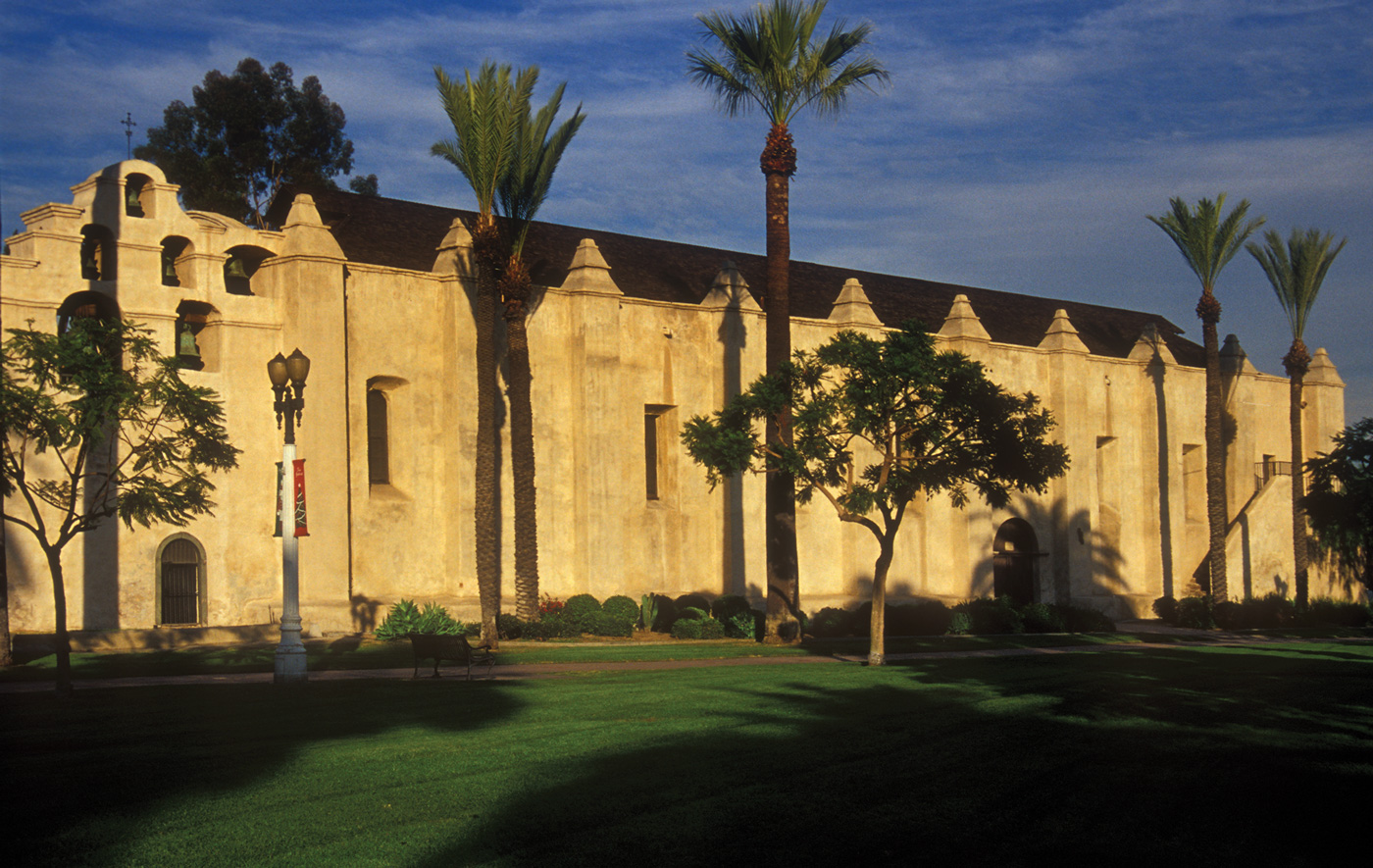 Gabriel in 1776.
1775 – The missions establish new rancho outposts, or estancias, across the region.
1784 – Nuestra Señora Reina de los Ángeles Asistencia is the first of five asistencias (assistant missions, extensions, or sub-missions) established in Los Angeles.
- Mission Administration: The Catholic Church extended its holdings by, first, building missions and then subsequently establishing agricultural ranchos, outposts, and asistencias well beyond the mission’s physical base. With Mexico’s northern expansion looming, the Church aimed to extend Spanish influence by creating a system or chain of structures that would become essential in their communities, by feeding the mission population and soldiers, accruing profits, and stretching their spiritual reach. Mission San Gabriel had more than a dozen outposts (including this site in Redlands) that were used for ranching and cattle grazing. For the missions, the absence of fast transport and refrigeration required that flocks and herds be removed from the immediate vicinity of the missions, so that the land closest to missions could be reserved for growing fruits and vegetables. Asistencia cemented Spain’s presence in the San Bernardino Valley.
- Known Asistencias
- 1787: Santa Margarita de Cortona, was a sub-mission of Mission San Luis Obispo de Tolosa. Rancho Santa Margarita, CA

- 1816: San Antonio de Pala Asistencia, along with Las Flores (below), was a sub-mission of Mission San Luis Rey de Francia.
- 1818: Santa Ysabel Asistencia may have been a sub-mission of Mission San Diego de Alcalá, Santa Isabel, CA, though it never received official “asistencia” status.
- 1823: Las Flores (San Pedro) Asistencia, along with San Antonio de Pala (above), was a sub-mission of Mission San Luis Rey de Francia, Camp Pendleton Marine Base, CA
- 1787: Santa Margarita de Cortona, was a sub-mission of Mission San Luis Obispo de Tolosa. Rancho Santa Margarita, CA
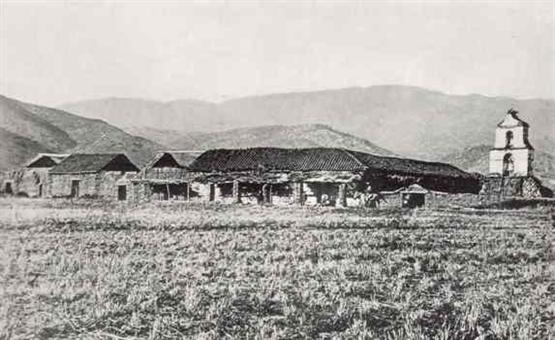
1810 – Guachama is renamed San Bernardino Rancho on May 20, 1810 (CA State Landmark No 95).
On May 20, 1810, Father Francisco Dumetz celebrates the feast day of the Catholic saint, Bernardine of Siena in a temporary chapel built at the large Indian rancheria of Guachama (Caballeria 1902:38), This event marked the consecration of the San Bernardino Rancho and the dominion of the Mission San Gabriel over the region.
1819 – The San Gabriel Mission drafts documents to establish the mission outpost at Guachama, only 1 mile from today’s restored Asistencia. Within 9 years of Dumetz’ arrival at Guachama, adobe buildings were being constructed, 1 mile from where you stand. Carlos Garcia, a Spaniard, and mayordomo (overseer) of the Rancho, directed construction of three structures: (1) an enramada (arbor) for worship, (2) an adobe administration building with storerooms, and (3) a personal residence. To Mission San Gabriel, this highly populated and well-travelled area was an important spot to concentrate its religious and agricultural efforts, so they approved the establishment of the Rancho San Bernardino and the Indian Rancheria of Guachama. Some Native communities were willing to learn about the mission’s field agriculture methods and religious teachings. However, regardless of any initial interest, the Native communities were forced to convert and were placed under restrictions that stripped them of their cultural heritage and freedoms.
1820 – The estancia (outpost and cattle ranch) construction is completed. The cattle ranch was done, complete with quarters for visiting missionaries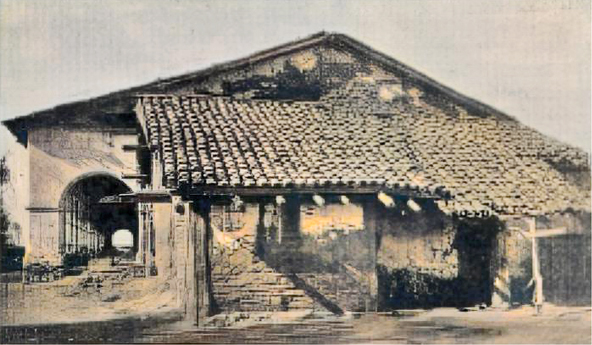 made available by 1820. Local Native groups did not feel the full brunt of the Spanish mission system until the founding of the Estancia. While initial dealings with cattle ranchers were peaceful, Native people suffered greatly as many were eventually enslaved or offered laborious “jobs” only if they deserted their traditional language, ceremonies, and art.
- What happened to the Maara’yam (Serrano) People once Europeans came to this area? Many people around the region were immediately impacted by the establishment of the San Gabriel Mission in the 1700s, like the Serrano of the Antelope Valley. Interestingly however, the Maara’yam (Serrano) of the San Bernardino area likely did not feel the full brunt of the Spanish mission system until the construction of the estancia at the rancho in 1819. They suffered greatly, as many were enslaved, or offered “jobs” if they traded in their traditional lifeways (foodways, language, ceremony, daily life, etc.). From this time until the secularization of the mission system in 1834, the Catholic Church parceled lands out to rancheros as land grants. In 1842, the Mexican government granted the deed, including Guachama and the Yucaipa’t’ village site, to Don Jose Lugo of Rancho San Bernardino. Without any “legal” claim to these traditional lands, except for proof of prior occupation, Maara’yam (Serrano) People, and many other Tribes, worked as cowboys and farmhands throughout the ranchero system. In 1875-1876, under executive orders, the United States forced the remaining Maara’yam (Serrano) onto reservations. In 1876 and 1891, the United States recognized the Maara’yam (Serrano) villages at Morongo and San Manuel, respectively, making them into formal reservations. At the time of Spanish contact, the Maara’yam (Serrano) people numbered somewhere between 5,000 to 15,000, but by 1910, the number of Maara’yam (Serrano) had dwindled to roughly 100 persons. After incredible hardship, the Maara’yam (Serrano) fought for their sovereignty. Today, the San Manuel Band of Mission Indians and Morongo Band of Mission Indians are respected and honored philanthropists in our community. They are a symbol of strength, perseverance, and leadership. Learn more about the San Manuel Band of Mission Indians at https://sanmanuel-nsn.gov/culture/history and the Morongo Band of Mission Indians at https://morongonation.org/our-story/
- Estancia or Asistencia? Much speculation surrounds this site’s actual designation as an official mission outpost of San Gabriel. In fact, both the San Bernardino outpost and the Santa Ysabel outpost were likely estancias that never fully received asistencia status. These outposts may have been part of a planned inland chain of missions in Alta California equal in importance to the established coastal chain, though they were not in operation long enough to achieve official asistencia status. Later, with the resurgence of funding for saving mission-style architecture, the estancia was reconstructed as an asistencia.
1820 – Construction of the Mill Creek zanja is complete. Spaniard Pedro Alvarez, a civil engineer, was sent by Mission San Gabriel to plan a course for the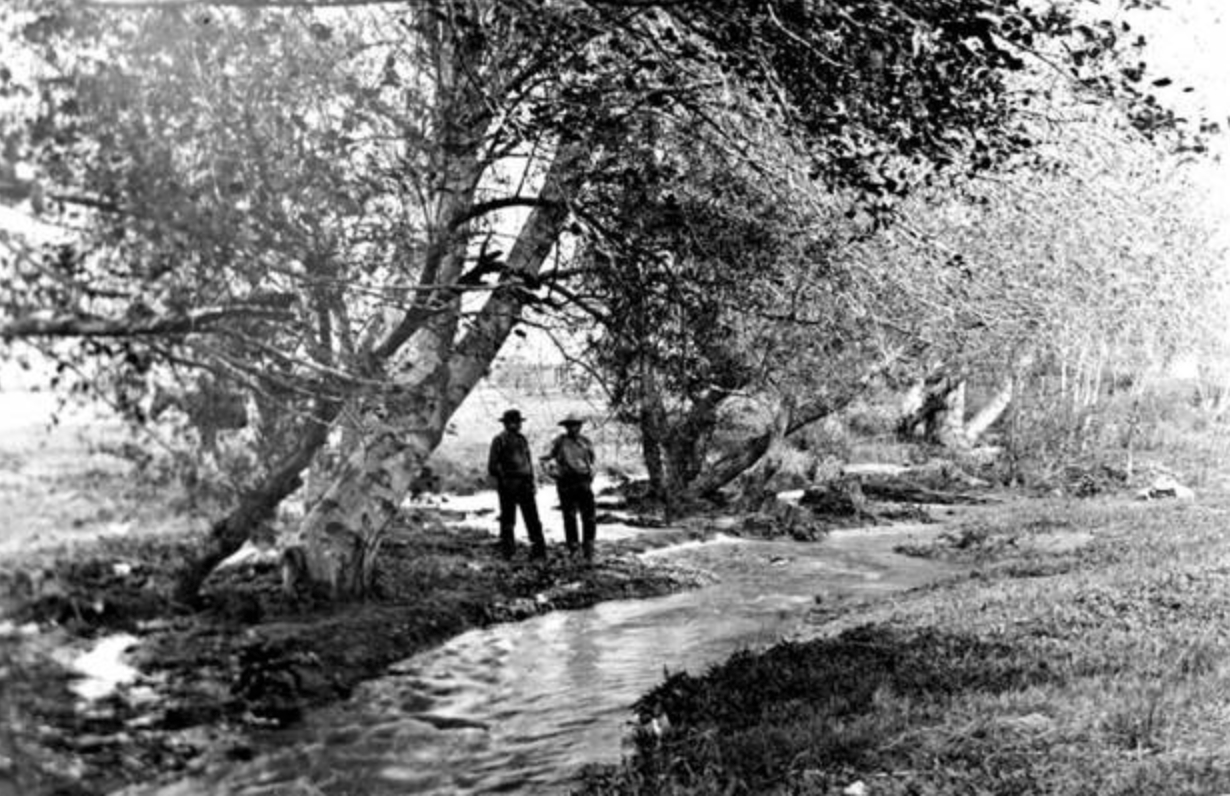 new Mill Creek zanja. The construction of this 12-mile-long irrigation ditch that would bring water to the estancia from Mill Creek was constructed primarily by members of the Guachama village (Scott 1976). According to legend, they dug the zanja using the shoulder blades of cattle for shovels and baskets for hauling dirt. The zanja provided drinking water and irrigation and became the defining manmade feature of early Redlands. Alvarez and Native laborers completed the zanja in 1820. The Native communities would continue to maintain the canal free of debris and lived in various places along the ditch. The area near Crafton and Colton in modern-day Mentone was once home to a historic Native settlement associated with the Crafton citrus industry, and contained a western “Indian School”, Christian cemetery, and a general store. The area was mainly inhabited by Maara’yam (Serrano) and Cahuilla Tribal groups throughout the mid-to-late 1800s prior to their removal to reservations. Today, the Maara’yam (Serrano) of the San Manuel Band of Mission Indians and the Morongo Band of Mission Indians play an active role in the preservation and public education as it relates to the Mill Creek Zanja.
1821 – Mexico wins its independence from Spain. The Mexican government began issuing land grants to prominent, well-connected families as a means of encouraging settlement of Alta California, bolstering lucrative hide (animal skin) and tallow (animal fat) to trade. Land grants that were issued by the Spanish colonists promised temporary housing and land to cultivate. Distinctly, the Mexican government gave titles to parcels of land as permanent settlements, to secure their reach in Alta California. Even though missions began to lose their influence, Mission San Gabriel still cultivated its outposts.
1823 – The Mexican Republic was created on November 17, 1823; the new regime was accepted in California. The fear of a Spanish loyalties in such a far-off province drove authorities from Mexico City to raise a new national flag and obtain oaths of allegiance from California citizens. From 1823 to 1828, there was a strong push for secularization.
In 1830, Majordomo Juan Alvarado (1826 – 1834) under mission direction relocates the Rancho San Bernardino Estancia to its present site, where he started constructing a new 14-room complex of adobe and timber. The violent oppression of many Native people led to two significant uprisings from these communities, one in 1831 and again in 1834. The Native Americans living in these rancherias were increasingly marginalized in this new social and political order. Unrest was evident, as some Native communities became missionized, and others did not. Due to recurrent violence and fires, the estancia was quickly abandoned after 1834
- Local historian Dr. Bruce Harley discovered that no records existed in the San Gabriel or Santa Barbara mission records that this building was an official
 mission asistencia, but there are records that confirm an asistencia was built in 1830.
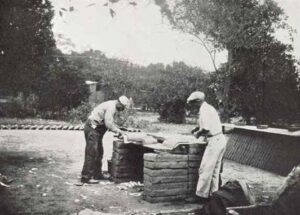
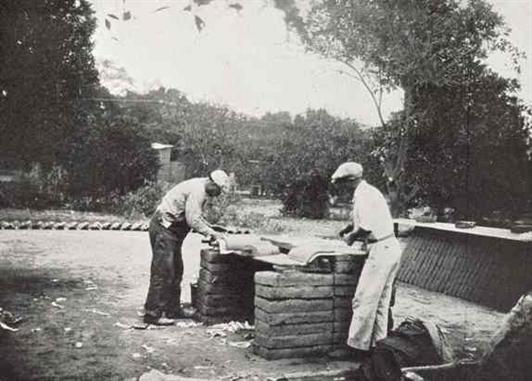
- Adobe bricks were made on the premises of the Asistencia.
- Raw materials including local mud, straw, and manure are gathered first.
- Raw materials are mixed in a pit, as soil, water, and additives are added to stiffen the mixture.
- The mixture is transported from the mixing pit to wooden forms, which are filled to the top and leveled.
- The form is removed and the bricks are left three or four days to dry. They are constantly flipped from side to side for full drying.
- After three to four weeks in the sun, the bricks are cured, and strong enough with which to build.
- Rain quickly dissolves the bricks, so either a temporary roof can be built to divert water or bricks can be covered in Spanish plaster (three parts sand to one part lime mixed with water). Lime was obtained from quarries or from seashells that are burned in a kiln and crushed to make lime.
- Even the scraps or the broken bricks were used, and would often time be used in making the floor.
- Once the building plans were drawn up, a foundation of stones was usually built, upon which the adobe bricks were set and built up. Builders would plaster the walls. Roof framing would be added and a straw roof was attached to the rafters.
- Porches protected adobe walls from rain.
- The Native Americans living in these rancherias were increasingly marginalized in this new social and political order. From the establishment of the Estancia until the secularization of the mission system in 1834, the Catholic Church parceled out Native lands to rancheros as land grants. Interestingly, when the government secularized the Missions, they required that land be set aside for each neophyte family (a neophyte is a Christianized Native American). The government stipulated that one half of the mission lands and property was to be given to neophytes in grants of 33 acres (13 ha) of arable land along with land “in common” sufficient “to pasture their stock.” The Spanish were also worried about losing “progress” and maintaining their troops that were dependent on the “toil of the unfortunate Indians” (Duran letter, Digital history). A board of magistrates was to oversee the mission’s crops and herds, while the land was to be divided into communal pasture, a town plot, and individual plots intended for each Indian family. In addition, one half of the herds were to be divided proportionately among the neophyte families (Campbell 1965). But, the promises made by the Spanish were quickly forgotten under the new Mexican government, as they tried to break up the monopoly on land that the missions had. Native Americans were exploited and forced into peonage as the new inhabitants, the Californios, acquired church lands as land grants, just like what happened with the Redlands rancho.
- Both Spain and Mexico made concessions and land grants in California. Spain made about 30 concessions between 1784 and 1821, and Mexico issued about 270 land grants between 1833 and 1846. In fact, the existing ranchos and their borders were the basis for the California land survey system. Spain’s land grants were temporary and were under the ruling that the land would return to the Spanish crown once the ranchero died. Mexico’s land grants that came later were more permanent.
